 Facts are friends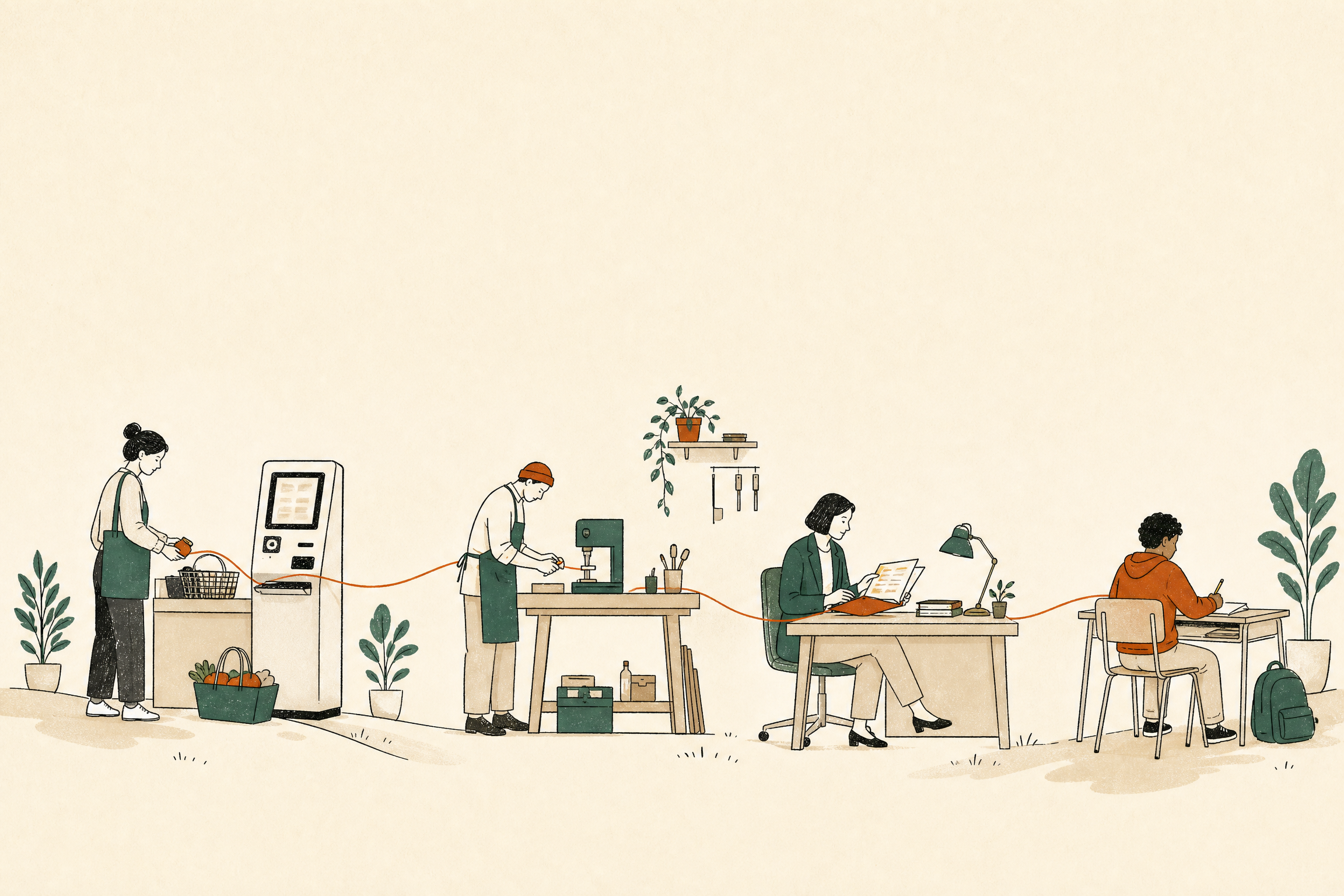
Quiet
Tasks change one at a time, often without a public decision or a headline.
Uneven
Capability moves faster than adoption, because trust, infrastructure and habits take time.
Consequential
The period before a tipping point is the best time to prepare.
The quiet kind of change
I have shopped at the same Sainsbury’s in Warwick for many years. A decade ago it had a full line of checkout staff, others covering breaks and someone on the customer-service desk. Today it is mostly self-service machines, one or two people overseeing a dozen kiosks. Smart shelves and handheld scanners have changed the restocking role. Even the night shifts are thinner than they were.
Nobody voted on this. There was no announcement, headline or public debate. It arrived a little at a time, over ten years, until one day the person you used to say hello to was no longer there.
That is what much AI-driven change looks like from the outside: a quiet thinning that is easy to explain away until it becomes normal. It reaches far beyond obviously mechanical tasks. Translators, researchers and people whose work depends on relational or tacit knowledge can see parts of their work absorbed into systems too.
Faster than the reassuring version, slower than the alarming one
The honest answer to “how fast is this happening?” has two parts. The capability is moving fast. Adoption into ordinary working life remains slower for ordinary reasons: infrastructure takes time, trust takes time, regulation takes time and human habits take longest of all.
Electric vehicles were already capable before mass adoption. Contactless payment took years to become everyday infrastructure, then COVID accelerated the change. AI-driven disruption may follow a similar shape: a long quiet build followed by a tipping point that feels sudden.
This kind of change is never a single event. It is a process, slower than its proponents predict and faster than its subjects prepare for.
What this means practically
We have time. It is limited, though it has value. The period between new capability arriving and its full effects landing is a preparation window. Use it.
Three questions worth sitting with
- What has already changed in your work, high street or profession without anyone quite deciding that it should?
- Which known change is being held back by regulation, cost or institutional reluctance?
- Who should you be talking to now, while choices still have room to move?
Once you have sat with those questions, the next step is practical.